Loud aliens with better things to doIf alien civilisations are out there, what sort would we detect? One recent view is that they'd be loud and brash.
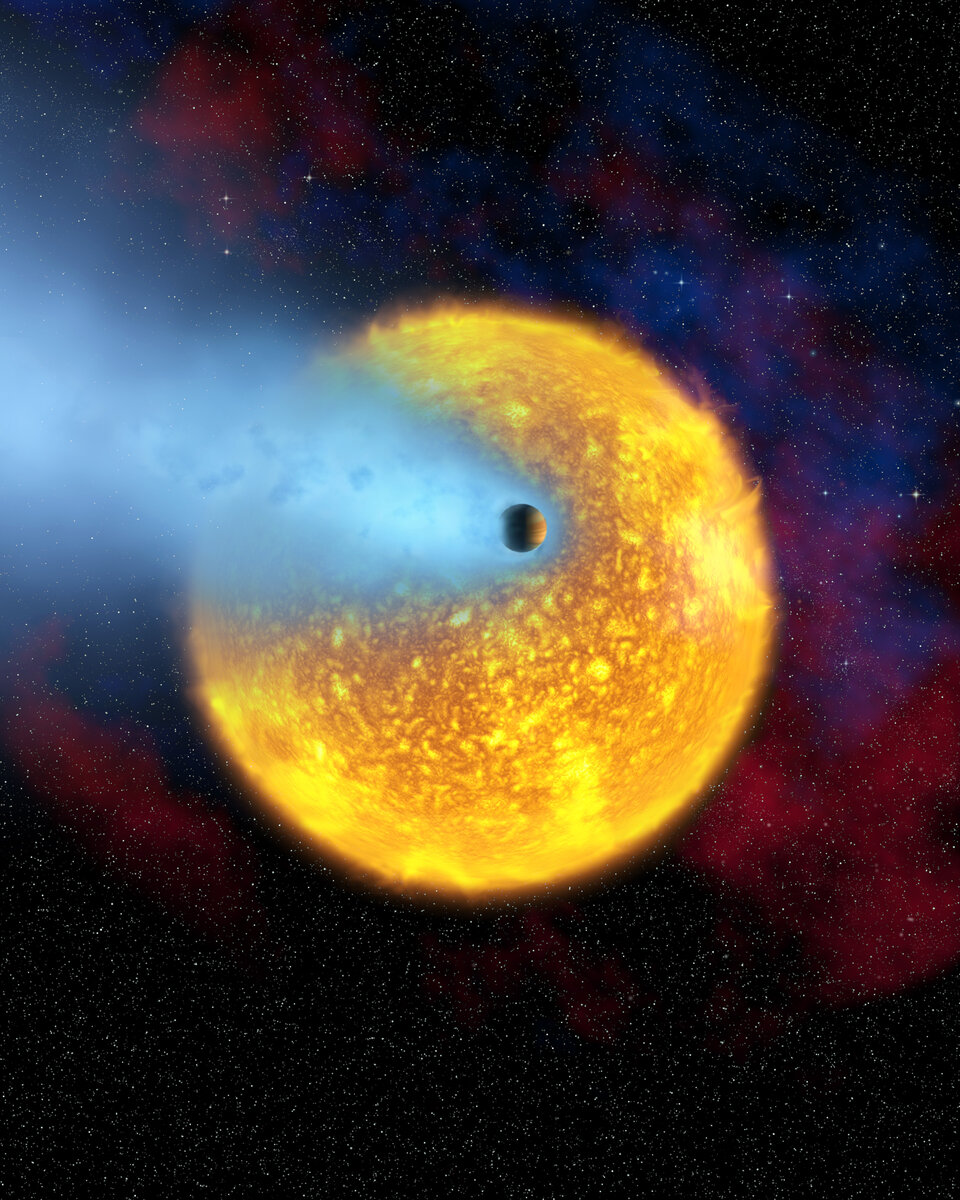
The first of two approaches as to the Search of Extraterrestrial Intelligence aired this year come from Astronomer Dave Kipping over at the Cool Worlds YouTube Channel. He looks at a new theory. It is based on the recent history of astronomy and not on any SF film or novel. Dave Kipping calls it the Eschatian hypothesis. You see the most ground-breaking astronomical detections are those that are most noticeable that reveal new types of astrophysical phenomena. An example of one of these is Kipping's own area of research, exoplanets. Before the first exoplanet was detected (back in 1988 which really is quite recent and it was only confirmed in 2003), astronomers took our Solar system of planets as the template of what to expect and so they devised techniques that would seek out our system's type of planets, especially Jupiter-sized planets on wide orbits around their stars. However, some radical thinkers looked in the most unexpected places. The first exoplanets were bizarre worlds; planets orbiting pulsars. A few years later, the first exoplanets were found around 'normal' stars but again they shocked the astronomical community with the discovery of hot Jupiters close to their star.
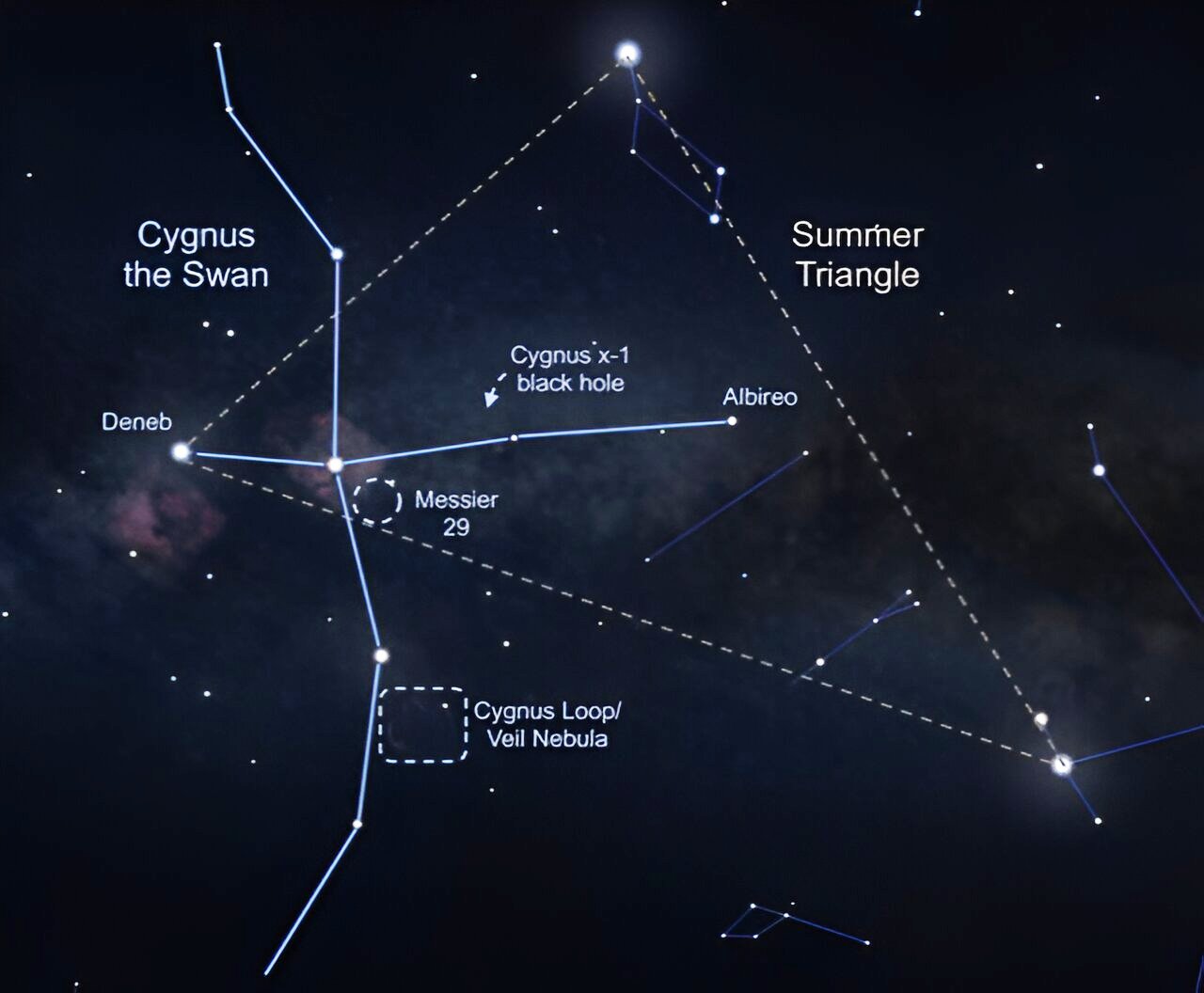
Yet, looking back we now find that planets around pulsars and hot Jupiters are, in fact, unusual and rare types of planets even if they are very 'noticeable'. In fact, less that 1% of stars have hot Jupiters even though most stars have planets. The reason is simple: detection bias. Hot Jupiters are big, BIG, and they are big and hot. You can hardly miss them, they are so obvious! Now, if you do not know of detection bias, then a good example would be for you to look up at the night sky with your naked eye (and what other kind of eye is there, I hear you cry).. About a third of the stars you see are larger than average stars and many of these are large due to coming to the end of their main sequence and so are in the last 10% of their life time. In fact only about 1% of stars are this big and in their last 10% end phase. For example, Deneb in the constellation of Cygnus is easily visible by eye but is roughly 2,000 light years away, while the nearest star, Proxima Centauri, is a smidgen over four light years away and yet it is invisible to the naked eye. This astronomical perceptual bias is known as Malmquist bias.
These hot Jupiters, and other astronomical detection biases such as core collapse supernovae, are the loud twits at the party that suck the oxygen out of the room. The folk who break the WSFS Constitution. We all know them. So, what has all this to do with alien detection? Dave Kipping's thought is that our first detection of an alien civilisation will be that of the 'loud twits'. He unpacks this idea, noting that things like supernovae are stars that after billions of years of stability have gone into a phase of disequilibrium. Dave Kipping thinks that the first detectable alien civilisations will be those in disequilibrium with their environment. Indeed, one proposed methods for aliens to detect us would be through anthropogenic climate change that affects our atmospheric temperature and chemistry. Alarmingly, nuclear war would be the most extreme disequilibrium we can probably, currently, consider inflicting on ourselves. In fact, back in 1971 it was suggested that we rid ourselves of our nuclear arsenal by detonating them in space to signal to aliens! Dave Kipping briefly goes into the maths – don't worry it is fairly simple. Basically, detectability is a function of both loudness and distance, and hence the volume of space in which this can happen. Loudness fades with the inverse square law and volume is related to the power of three (or cube). This works out as the probability of detection is proportional to Loudness to the power of one-and-a-half (power of 1.5). What this means is that if a civilisation is 100 times louder than average then it is 100 to the power of 1.5, or a thousand, times more detectable! As a twist on Arthur C. Clarke's famous saying came from Carl Schroder with ' Any sufficiently advanced technology is indistinguishable from nature'. Hollywood, Kipping opines, broadly portrays as aliens being either hostile or alternatively advanced benevolent. Kipping says his idea is different in that our first detection of an alien civilisation will be one in its death throes. Unlike in Hollywood, our first detection would be of a train wreck of a civilisation. Most alien civilisations, Kipping thinks, would be quietly getting on with life and any astronomical imprint they may be making from their distance would be barely discernable to us: it would be part of the natural background noise. You can see Dave Kipping's 15-minute video below complete with several SFnal references and ideas as what to do about it. The second work comes from Vienna-based mathematician Sergey Ivliev (Ivliev, S. (2024) Autonomous AI-Cosmoindustry and the Quiet Expansion Filter: A Threshold-Based Resolution of the Fermi Paradox. Preprint.) It attests that loud-noise, shouty aliens are rare and that our radio based searches are unlikely to turn up any discoveries. Indeed, so daunting is biological interstellar travel that alien intelligences would not themselves expand to other stars unless they really had to: Kipping's Eschatian motivation above. Once a civilisation can design, launch, and maintain autonomous industrial systems beyond its home planet, interstellar expansion no longer requires biological starships or a human-like empire. It can proceed through low-mass probes, robotic seed factories, archival payloads, biological repositories, local computation, and slow replication across nearby stellar systems. Sergey Ivliev proposes a quiet expansion filter. He suggest that successful expansion would be machine-mediated, distributed, low-noise, and partly biological rather than Kardashevlike or imperial. His The hypothesis predicts that successful advanced expansion, if present, is more likely to appear as weak artefacts, local probes, small-scale resource processing, exoplanetary anomaly clusters, or techno-biological preservation systems than as galaxy-scale energy harvesting. He concludes that if we continue to fail to detect weak artefacts, local probes, small-scale resource processing, exoplanetary anomaly clusters then that means that there is a Fermi Paradox great filter. This filter, if it exists, Sergey Ivliev argues is ahead of us preventing us from sending AI probes out into the Galaxy. Either way, if you go for David Kipping's or alternatively Sergey Ivliev's view do not expect us to see giant arcs of relativistic highways across the cosmos or Dyson encased stars…. Jonathan Cowie
Jonathan Cowie is a co-founding member of the SF² Concatenation team and an environmental scientist. His books include Climate & Human Change: Disaster or Opportunity? from Parthenon Publishing (1998) as well as Climate Change: Biological and Human Aspects (2007, from Cambridge University Press that has had a second updated and substantially expanded edition in 2013), and The Earth's Flips of State: The co-evolution of life and planet (Oxford U. Press, 2026). He has been active in the SF community since the 1970s and has co-authored (with Tony Chester) Essential SF: A Concise Guide (2005).
[Up: Article Index | Home Page: Science Fact & Fiction Concatenation | Recent Site Additions] [Convention Reviews Index | Top Science Fiction Films | Science Fiction Books] |